Environmental news
News
SEPTEMBER 2026
What can a river tell us?
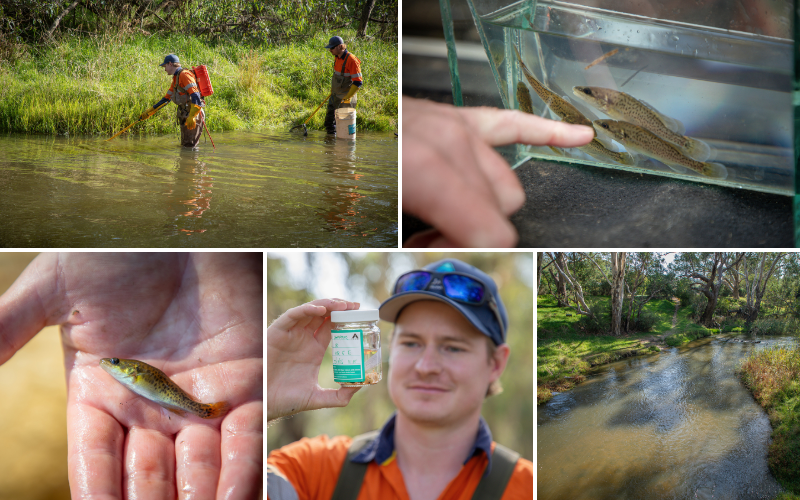
This World Rivers Day, we’re taking a closer look at the science helping us understand the Campaspe River
There’s much more happening in a river than what we can see from the bank.
Beneath the surface, fish, aquatic plants, insects and other species form a complex ecosystem. Understanding what lives there, and how that changes over time, takes ongoing monitoring.
This World Rivers Day, we’re taking a closer look at Fosterville Gold Mine’s long-term monitoring of the Campaspe River and what it is helping us learn about this important local waterway.
Monitoring the Campaspe
Since 2016, FGM has engaged independent environmental consultants Aquatica Environmental to monitor the Campaspe River twice each year.
By returning to the river regularly and collecting information over time, the monitoring program helps build a picture of the river ecosystem and identify changes along the way.
During 2025, surveys covered approximately 18 kilometres of the Campaspe River and the lower reach of Axe Creek, with monitoring undertaken in autumn and spring.
Scientists looked at a range of indicators, including fish, aquatic plants, macroinvertebrates and water quality.
What did we find?
The 2025 monitoring provided some interesting insights into the diversity of life within the Campaspe River.
A total of 25 aquatic plant species were recorded, while macroinvertebrate diversity was the highest recorded since FGM's monitoring began.
Macroinvertebrates are small animals without backbones that can be seen without a microscope, such as aquatic insects, snails and worms. Monitoring the types and numbers present can provide useful information about aquatic ecosystems.
There were some notable fish observations too.
The endangered freshwater catfish was recorded for the first time through FGM's monitoring program, while juvenile Murray Cod were observed again.
Together, these findings add to the information collected over almost a decade of monitoring and help build our understanding of the plants and animals living within the river.
Why monitor over time?
A river is constantly changing.
Rainfall, water flows, seasons and environmental conditions can all influence what is observed at any particular point in time. That's why looking at results over many years can be more informative than relying on a single survey.
Regular monitoring allows scientists to build a longer-term picture and compare findings from one survey to the next.
For the Campaspe River, each round of monitoring adds another piece to that picture.
Looking beneath the surface
World Rivers Day is an opportunity to recognise the environmental and community value of rivers around the world, including those right here in Central Victoria.
For FGM, continuing to monitor the Campaspe River is an important part of understanding the local environment and the ecosystems surrounding our operations.
And while we might not always be able to see everything that's living beneath the surface, ongoing science and monitoring can help us learn a lot more about the river and the life it supports.
DOWNLOADS